The Website Audit That Ends With "Can You Help Us Fix This?"
Bring PageSpeed evidence and your own judgment into one guided review, prioritize what actually matters, and hand the business owner a branded plan instead of a pile of warnings.
Built for consultants and agencies serving local businesses. Apply your judgment faster without pretending software can replace it.
The Problem With Most Website Audits Is Not Finding More Problems
You can already find website problems.
Open PageSpeed Insights and you can get performance scores, accessibility warnings, SEO checks, best-practice flags, and a long list of technical opportunities.
Use a checklist and you can add your own observations about headlines, calls to action, trust signals, service pages, contact options, and follow-up.
The problem starts when you have to turn all of that into something useful for the business owner. Now you are switching between tabs, copying notes, deciding what matters, translating developer language, and still building the report afterward.
And when the report is finally done, there is another problem waiting for you.
The client sees a score, a pile of findings, and a lot of words that sound important. But they still do not know what should happen first.
Picture a discovery call with a local business owner. You start explaining that their site has render-blocking requests, unused JavaScript, a contrast issue, weak mobile performance, and several marketing problems around proof and contact paths.
You know what those things mean.
The client hears a list.
Instead of the audit creating urgency around the right problems, it has quietly turned into a technical vocabulary lesson.
That is the real frustration.
You are not short on expertise. You are short on a clean bridge between your expertise and the client's decision.
Without that bridge, you can spend more time explaining the audit than using the audit to move the client forward.
And underneath that is the part that stings a little more: the business owner may leave the meeting knowing their website has problems, but still not clearly seeing why you are the person who should help fix them.
Will the client see me as the strategic expert who can guide the next decision, or as the person who handed them another technical report?
The data did its job. The audit did not finish the job.
| What You May Be Doing Now | What the Client Actually Needs |
|---|---|
| Opening PageSpeed in one tab | One technical evidence source inside the audit |
| Checking marketing issues somewhere else | One guided review for trust and conversion questions |
| Copying warnings into notes | Findings already connected to the audit |
| Translating developer language during the meeting | Plain-English meaning, impact, and next action |
| Treating every warning as urgent | Must Fix, High Priority, and Improve Next |
| Debating whether one score is good or bad | Context for what the score can and cannot prove |
| Rebuilding the report by hand | A branded report generated from the completed audit |
| Giving the client a giant problem list | A short sequence of recommended priorities |
| Ending with unanswered questions | A 30-day plan and relevant service categories |
| Hoping the client connects the dots | A clearer next-step conversation |
PageSpeed Tells You What's Broken. This Tells Your Client What to Do About It.
Website Trust & Conversion Audit brings three things together in one focused workflow.
Objective Technical Evidence
Run the optional Quick Website Scan and bring Google PageSpeed Insights and Lighthouse findings directly into the audit.
Consultant Judgment
Review the things software cannot responsibly decide on its own, including clarity, trust, proof, calls to action, content, and follow-up readiness.
Client Action
Turn the combined findings into priorities, recommendations, a 30-day action plan, relevant services, and a compact client-ready report.
Automated tools and human judgment are good at different things. A scan can identify a contrast problem, missing technical element, or technical SEO issue. It cannot decide whether the offer is convincing, the proof feels credible, or the local conversion path makes sense.
The app collects the evidence that can be automated, then guides the decisions that still need a consultant.
The software should make your expertise easier to apply, not try to replace it.
Three Moments That Change the Client Conversation
The "Here Is What Matters First" Moment
You open the priority list instead of a long technical export. The client points to the first three items and says, "So these are the things we should handle first?" Now the conversation has a sequence.
The "Now I Understand It" Moment
You show a finding with its plain-English meaning, impact, and next action. Instead of asking what the warning means, the client can discuss whether it deserves attention now or later.
The "Can You Help Us Fix This?" Moment
You reach the end with priority recommendations, a 30-day plan, and relevant service categories visible. The natural next question becomes, "Can you help us with these priorities?"


Everything Inside Website Trust & Conversion Audit
The app is intentionally focused on one job: help you evaluate a local business website, decide what matters, explain it clearly, and leave the client with a professional next step.
1. The Guided Website Audit Workflow
The app walks you through one section at a time. The left navigation shows where you are, and only the active working section is displayed.
What's Included:- Start Here onboarding that explains the workflow before the first audit
- Client setup for business name, primary contact, service area, website, email, phone, and priority service line
- Guided review sections for clarity, calls to action, trust, content, mobile usability, and follow-up readiness
- Back and Continue controls for a step-by-step experience
- Progress tracking without an intimidating question count
- Save Audit and Open Audit controls so you can pause and resume work
The result is a workflow that feels like using an actual consultant tool instead of completing a long electronic checklist.
2. The Quick Website Scan
The optional Quick Scan brings objective technical evidence into the audit using Google PageSpeed Insights and Lighthouse. You can run mobile and desktop scans without manually bouncing back and forth between separate reports.
What's Included:- Mobile and desktop PageSpeed/Lighthouse scan
- Performance, Accessibility, SEO, and Best Practices scores when returned by Google
- Technical checks grouped into Passed, Needs Attention, and Not Returned
- Scan Summary at a Glance for a quick read on the technical picture
- Transparent explanation that Performance is a lab snapshot and can vary between runs
- Clear explanation that a Lighthouse SEO score is a technical automated score, not a complete SEO verdict
You get the credibility of objective technical data without pretending one automated score tells the whole story.
3. Plain-English Technical Recommendations
Raw Lighthouse language is useful for developers, but it can be rough in a client conversation. The app translates important findings into language a consultant and business owner can actually use.
What's Included:- What this means
- Why it matters
- What to do next
- Consultant-oriented priority level
- Estimated savings context when Google provides it
- Learn-more links to relevant Google or Chrome documentation when available
A finding should create clarity, not force you to stop the meeting and explain what "forced reflow" means from scratch.
4. The Priority Fix List
Not every technical warning deserves the same urgency. The app uses consultant-oriented prioritization instead of treating every failed audit item as a fire.
What's Included:- Must Fix for issues that can create serious access, usability, indexing, or business problems
- High Priority for meaningful issues that deserve attention soon
- Improve Next for worthwhile optimizations that should not crowd out bigger problems
- Priority logic that considers issue type, likely visitor impact, severity, and available savings data
- Suggested audit ratings that you can accept or override
- Visible confirmation when scan suggestions are applied
The client sees a sequence, not a scare tactic.
5. The Client-Ready Report Dashboard
When the audit is complete, the app turns the findings into a compact report designed to be presented, printed, or saved as a PDF.
What's Included:- Client business name as the main report headline
- Website Trust & Conversion Audit as the report type
- Audit summary and prioritized recommendations
- 30-day action plan
- Recommended services tied to the findings
- Optional PageSpeed scores, technical evidence, detailed fix instructions, and agency contact information
- Dashboard-style layout designed to fit the complete report into roughly one to two pages
Instead of spending another hour rebuilding your notes in a separate document, you finish the audit with the report already waiting.
6. Agency Branding, Saving, and Built-In Help
The app is designed to fit into your consulting workflow instead of looking like a generic third-party tool.
What's Included:- Agency or brand name, advisor name, role, website, email, and phone
- Square agency logo upload
- Custom color controls
- Agency logo used in the app and favicon when uploaded
- Trust Green shield icon as the clean default when no logo is uploaded
- Browser auto-save plus portable Save Audit files
- Built-in Help Center covering Lighthouse, PageSpeed, score fluctuations, common technical issues, and how to explain findings to clients
Your client experience stays branded while the technical sources remain transparent.
7. Website Audit Foundations Training
Learn the strategy behind the app so you understand what a trust and conversion audit is designed to accomplish—not merely where to click.
What's Included:- Why website trust and conversion friction matters to local businesses
- The proper roles of PageSpeed evidence and consultant judgment
- How to interpret scores without overstating what they prove
- How clarity, calls to action, proof, content, mobile usability, and follow-up affect the buyer journey
- How to prioritize findings without overwhelming the client
- How to turn the finished audit into a useful, ethical next-step conversation
You begin with the reasoning behind the workflow, then use the app with greater confidence and context.
Go From Website URL to Client-Ready Plan in Four Steps
Add Agency and Client Details
Enter your branding once, then add the client's business name, website, phone number, and audit context.
Run the Quick Website Scan
Use your PageSpeed API key to bring mobile and desktop evidence into the audit for the URL you enter.
Complete the Guided Review
Evaluate clarity, calls to action, trust, proof, content, mobile usability, and follow-up readiness.
Prioritize and Generate the Report
Organize findings into three priority levels and create the branded report with recommendations and a 30-day plan.
Save and reopen the audit later without losing the client context.
Worried About the Technical Side? Here's What You Need to Know.
"I am a marketer, not a developer."
The technical recommendation layer translates important issues into what they mean, why they matter, and what to do. When a fix genuinely belongs with a developer, the app says so.
"Does the app make the final judgment for me?"
No. Scan suggestions remain suggestions until you confirm them. You can accept them, change them, or override them.
"What if the Performance score changes?"
The app explains that Performance is a lab snapshot and can move because of server response, network routing, caching, third-party scripts, and other test conditions.
"What if Lighthouse says SEO is 100?"
The app makes it clear that 100 means the page passed the automated SEO checks Lighthouse ran. It does not mean the business has perfect local SEO or no other SEO work to do.
"Do I have to set up an API?"
For reliable Quick Scans, add your own Google PageSpeed API key one time in Settings. The app includes setup guidance and a clear readiness indicator.
"Can I use my own branding?"
Yes. Add agency details, upload a square logo, and choose your colors. The uploaded logo replaces the default shield in the app and favicon.
"Can I save client work?"
Yes. Progress auto-saves in the browser and you can also download a portable audit file to reopen later.
This Is a Strong Fit If You Are...
- A marketing consultant working with local businesses
- A local SEO consultant who wants a stronger website conversation starter
- A web designer or agency that audits before quoting improvements
- A digital agency offering conversion, SEO, lead generation, or website optimization
- A consultant who wants a focused tool without another large SaaS subscription
This Is Probably Not for You If You Need...
- A multi-user enterprise SaaS platform with team permissions
- A full-site crawler for hundreds or thousands of URLs
- A replacement for Search Console, GA4, or a dedicated technical SEO platform
- A tool that makes every marketing judgment automatically
- Rights to resell or redistribute the app to other consultants or agencies

I've been creating tools for marketing consultants and agency owners since 2010. More than 8,000 customers. 200+ products. 40+ Deal of the Day awards. I've seen what works and what doesn't across thousands of consultants at every stage.
My products reflect both marketing strategy and the everyday work of selling and delivering consulting services. After years of watching which tools buyers actually use, I focus on practical products that are easy to explain and put to work with a real client.
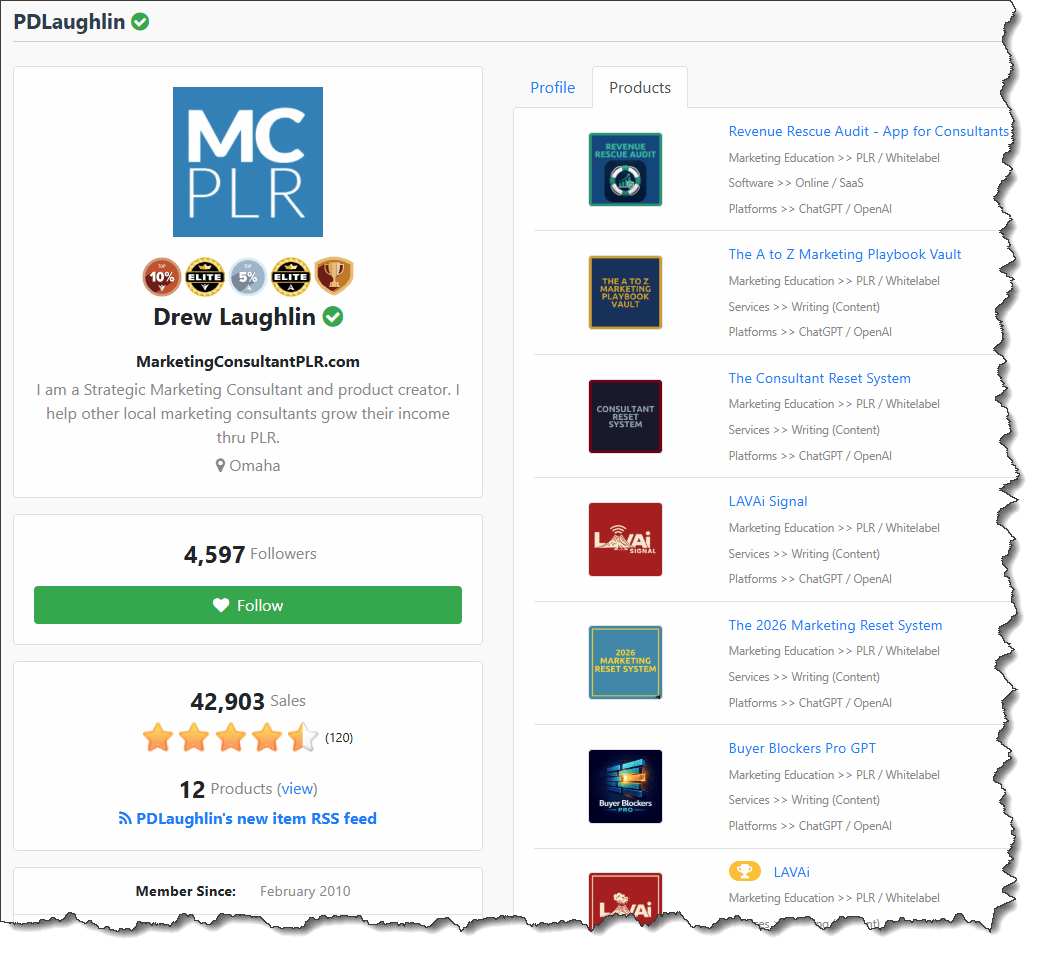
Note: This screenshot is from the WarriorPlus platform. I have well over 10,000 additional sales at JVZoo and Thrivecart.
The Missing Piece Is Not More Audit Data. It Is Decision Structure.
PageSpeed provides technical findings. Your experience provides professional judgment. But neither automatically creates the sequence a client needs in order to understand what matters first, what can wait, and what kind of help may be appropriate.
The Evidence-to-Action Priority Engine
It combines three inputs:
Technical Evidence
Google PageSpeed Insights and Lighthouse findings provide an objective starting point.
Consultant Review
You assess clarity, calls to action, trust, proof, content, mobile usability, and follow-up readiness.
Priority Logic
The app organizes the combined findings into Must Fix, High Priority, and Improve Next.
It is not another score for the client to admire or argue about. It is the bridge between evidence and a decision-ready action plan.
| The Fragmented Audit Way | The Evidence-to-Action Priority Engine |
|---|---|
| Run a technical tool, then translate it manually | Bring technical evidence directly into the guided audit |
| Treat the automated score like the whole answer | Use the scan for what it can measure and consultant judgment for the rest |
| Copy technical warnings into a report | Translate important findings into plain-English meaning, impact, and next steps |
| Give the client one giant problem list | Organize findings into Must Fix, High Priority, and Improve Next |
| Rebuild notes in a separate client document | Generate the client report from the audit itself |
| End with "Here are the problems" | End with priorities, a 30-day plan, and relevant services |
The breakthrough is not gathering more data. It is giving every useful piece of evidence a role in the client's next decision.
Client Audit Presentation & Proposal Kit
The app solves the audit problem. The next challenge appears when you sit down to present the findings, explain the priorities, and turn interest into a clearly scoped implementation conversation.
If you want support for that next step, add the Client Audit Presentation & Proposal Kit at checkout.
What's Included:- 15-minute client audit walkthrough script
- Implementation Proposal Template and in-app Client Audit Proposal Builder
- Full Service, Packaging & Pricing Guide, including the expanded Pricing & Packaging Worksheet, with 20 service ideas, illustrative project and retainer ranges, six ready-to-adapt packages, scope boundaries, cost and margin worksheets, and a completed pricing example
- Five follow-up emails plus objection responses
It also includes a 5-Minute Audit Meeting Planner, Implementation Offer Builder, and completed fictional client example. The core app is complete on its own. This kit helps you prepare, present, price, propose, and follow up without inventing the offer during the client meeting.
This optional upgrade is available after you click the Buy Now button below.
Website Trust & Conversion Audit
Get the complete app and consultant workflow for finding website trust and conversion issues, prioritizing what matters, and turning the findings into a client-ready action plan.
| Included | What It Helps You Do | Value |
|---|---|---|
| Website Trust & Conversion Audit App | Guide the complete website review and organize the findings in one focused workflow | $497 |
| Quick Website Scan | Bring Google PageSpeed Insights and Lighthouse evidence directly into the audit | $197 |
| Evidence-to-Action Priority Engine | Separate Must Fix, High Priority, and Improve Next recommendations | $147 |
| Plain-English Technical Guidance | Explain what technical findings mean, why they matter, and what should happen next | $97 |
| Client Report Dashboard | Generate a branded report with priorities, action plan, and recommended services | $197 |
| Agency Branding & Portable Audits | Add your branding and save or reopen individual client audits | $97 |
| Built-In Help Center | Understand scores, common issues, and how to explain the findings to clients | $67 |
| Website Audit Foundations Training | Understand why the audit matters, how to interpret evidence responsibly, and how to turn findings into a useful client conversation | $197 |
| Total Package Value | $1,496 | |
Get Website Trust & Conversion Audit
Use it in your own marketing business and client work, customize it with your agency branding, and start turning website findings into clearer next-step conversations.
Instant digital access. Standalone HTML app. Use it for your own agency and client work under the included license.
You Have Three Choices
Frequently Asked Questions
What exactly am I buying?
You receive the standalone Website Trust & Conversion Audit HTML app, the Website Audit Foundations Training, and supporting product documentation. The app includes the guided audit workflow, optional Quick Scan, prioritization, agency branding, Help Center, save/open audit functionality, and client report.
What is the Website Audit Foundations Training?
It explains the strategy behind the app: why trust and conversion friction matters, what PageSpeed evidence can and cannot prove, where consultant judgment belongs, how to prioritize findings, and how to use the completed audit to guide a useful client conversation.
Does this automatically scan and score the entire website?
No. The Quick Scan pulls technical evidence from Google PageSpeed Insights and Lighthouse for the URL you scan. The app then combines that technical evidence with a guided consultant review. It is not a full multi-page crawler and it does not pretend software can accurately judge every marketing or conversion question.
Where do the Quick Scan scores come from?
The technical scores and audit data come from Google PageSpeed Insights and Lighthouse. The app adds its own consultant-oriented presentation and prioritization layer to make the findings easier to interpret and discuss with a client.
Why can Performance scores change between scans?
Lighthouse Performance testing is a lab snapshot. Server response, network conditions, caching, third-party scripts, and other conditions can change from one scan to another even when the website has not been intentionally changed. The app explains this directly so the score is used as evidence, not treated as a permanent verdict.
Does an SEO score of 100 mean the site has perfect SEO?
No. It means the page passed the automated SEO checks Lighthouse ran during that scan. It does not evaluate the full local SEO strategy, Google Business Profile, backlinks, competitive landscape, content quality, service-area strategy, or every other factor that can affect visibility.
Do I need a Google PageSpeed API key?
For reliable Quick Scans, yes. You create your own Google PageSpeed API key and add it one time in Settings. The app includes setup guidance. Your key stays in the browser and is not included when you save a portable client audit file.
Can I use my agency logo and colors?
Yes. Settings lets you add your agency information, upload a square logo, and choose brand colors. If you do not upload a logo, the app uses the built-in Trust Green shield icon as the default.
Can I save audits and use the app with multiple clients?
Yes. Progress auto-saves in the browser, and you can download portable audit files for individual clients and reopen them later. This gives you a simple way to keep client work without requiring a centralized SaaS account.
Can I host the app on my own domain?
Yes. The current app is a self-contained index.html file and can be deployed on static hosting such as Cloudflare Pages. The Quick Scan still needs internet access to call Google's PageSpeed Insights API when you run a scan.
What are the usage rights and refund policy?
You may use the app for your own business and for client work according to the included license. You may customize the agency branding for your own use. You may not resell, redistribute, share, or transfer the source app to other marketing consultants or agencies as a competing product. Because this is a digital product with immediate access to downloadable files, all sales are final unless the checkout page specifically states otherwise.
Your Next Website Audit Can End With a Plan Instead of a Pile of Warnings
You do not need another tool that simply proves a website has problems. You need a cleaner way to combine evidence with your own expertise, explain what matters, and give the client a next step they can understand.
Run the scan. Apply your judgment. Prioritize the fixes. Generate the report. Start the next conversation from a stronger place.
Instant digital access. Standalone HTML app. Use it for your own agency and client work under the included license.